
Checking Criminal History in Big Water
A Big Water record search starts with place and authority. The town office can address records it keeps, but an event on a state highway or in Glen Canyon may belong to a different government. Read the citation, badge, report number, or agency heading before sending a request.
- Decide whether the event occurred inside town, on a state highway, in Glen Canyon, on other federal land, or in unincorporated Kane County.
- Ask which agency created the report: Town Marshal, Kane County Sheriff, Utah Highway Patrol, National Park Service, or another federal officer.
- Call Kane County Jail at 435-644-4914 for current custody, because Big Water has no verified jail or public roster.
- Search Xchange or call Kane County Justice Court for lower cases and Sixth District Court for felonies or class A misdemeanors.
- Use BCI Right of Access only for your own Utah repository history, not as a public name search.
This sequence keeps the report, booking, and court file separate. It also prevents a GRAMA request from being sent for a federal record governed by FOIA.
Big Water Records Depend on Location
Big Water sits near Lake Powell, the Arizona line, highways, and federal recreation land. That Big Water geography changes the record holder. A Big Water town event can involve the Marshal or Sheriff. A highway stop near Big Water can produce a UHP or DPS file. A Glen Canyon incident can produce an NPS record, even when Big Water custody later occurs in Kane County.
Use one simple Big Water test: where did the event occur, and which agency number appears? Then match the request law. Big Water and Sheriff executive records use Utah GRAMA. UHP files follow Utah DPS channels. National Park Service reports use federal FOIA. Once Big Water charges are filed, the court record follows judicial access rules, not the law that governed the officer’s report. This holder-first method is the most reliable way to find Big Water criminal records.
Big Water Police Department Records
Big Water does not present a conventional police department records portal. Utah BCI’s 2024 agency table lists a Big Water Town Marshal with one sworn employee and a reporting population basis of 542. That is a Big Water staffing fact, not proof of continuous coverage, a current Census estimate, or a town crime rate. No official Big Water arrest log, police app, or inspectable police request form was found.
The Big Water office is at 60 North Aaron Burr and can clarify records Big Water itself keeps. KCSO main at 435-644-4916 and 24-hour dispatch at 435-644-2349 are the documented county safety fallbacks. If a Sheriff deputy created the Big Water file, use the KCSO GRAMA process. Do not label that county form as a Big Water Town form.
The county’s official Quick Links page provides the government route to Big Water rather than an unofficial directory.
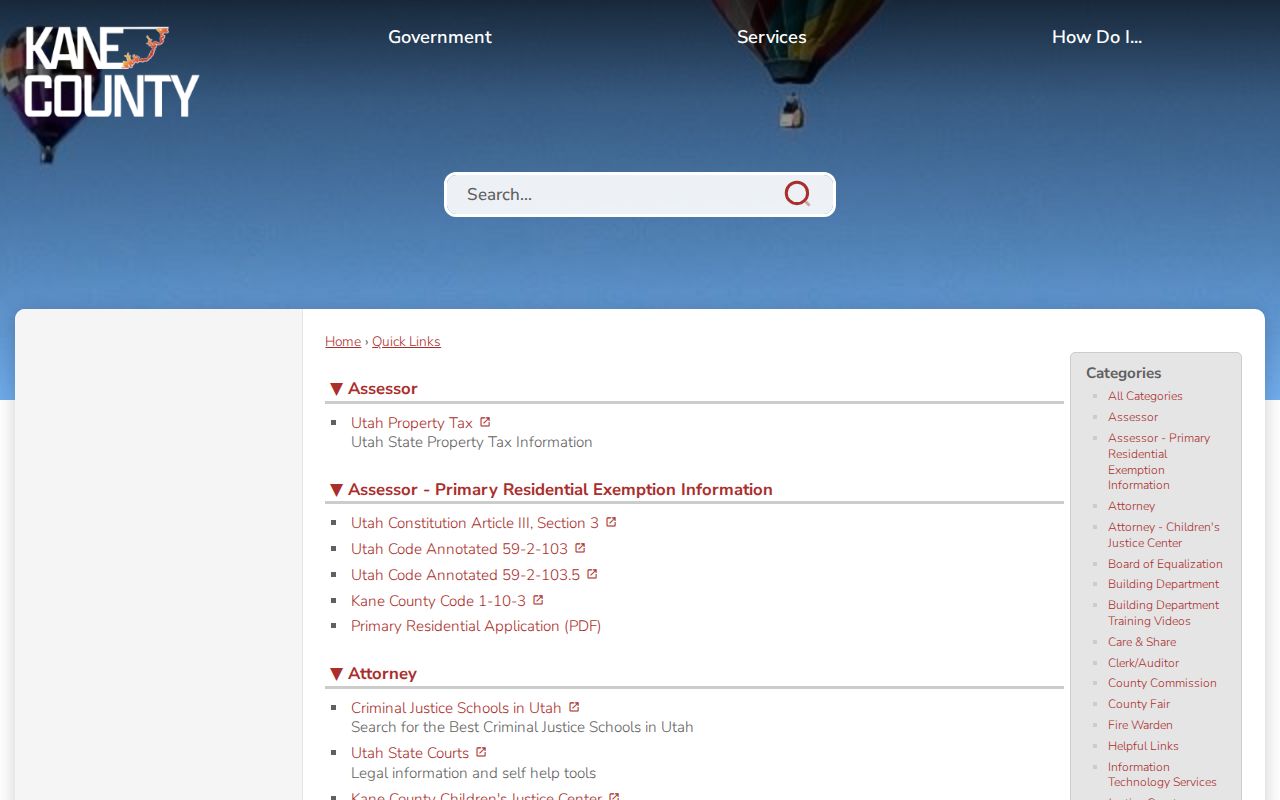
The captured link page is a starting point for Big Water contacts, while Big Water law-enforcement files still follow the agency that created them.
Lake Powell Changes Big Water Record Paths
KCSO describes Lake Powell as about 254 square miles of water with roughly 1,900 miles of shoreline and around two million annual visitors. Those figures explain why Big Water-area records can involve boating, park, visitor, and multi-agency work. They do not establish a Big Water crime count or rate.
For a Glen Canyon National Recreation Area incident, use the National Park Service’s written route through FOIA.gov, regional fax, or mail. The documented park process says email submissions are not processed. For a highway crash or trooper report, use Utah DPS. A person jailed after either event may still have a Kane County booking record, but that custody file does not replace the original NPS or UHP narrative.
Big Water Arrests and Bookings
No Big Water booking facility, inmate page, or arrest blotter was verified. After a Big Water arrest, custody can consolidate at Kane County Jail, 971 East Kaneplex Drive in Kanab. Jail personnel create a separate Big Water intake record with identity, arrival, alleged charges and holds, fingerprints and a photo when authorized, bond action, and release or transfer. The county says a magistrate sets Big Water bail within 24 hours.
Call the jail at 435-644-4914 for a present Big Water custody question. The absence of a Big Water name online does not show release because Kane County publishes no public roster. For releasable Big Water booking material, submit KCSO GRAMA with the date, likely arresting agency, Big Water-area location, and the specific intake component. If the person transfers from Big Water to state custody or supervision, switch to UDC Offender Search.
The original Big Water report remains with the arresting agency. That can be the Marshal, KCSO, UHP, NPS, or another officer with authority at the Big Water scene. Keep the agency number for each follow-up request.
Old Big Water Court Records Mislead
Older official material may mention a Big Water court, but the current Utah Courts Kane directory does not list one. It lists Kane County Justice Court and Orderville Justice Court, with Sixth District Court for higher-level Big Water cases. Current routing controls. A historical Big Water reference should not send a reader to a retired municipal system.
For a lower-level Big Water-area matter, start with Kane County Justice Court at 76 North Main in Kanab, 435-644-2351, unless a clerk identifies another venue. Big Water felonies and class A misdemeanors go to Sixth District Court in Suite 2, 435-264-4790. Both can appear through Xchange Public Case Search. Big Water court location follows offense level and territorial jurisdiction, not the office that wrote the report.
Municipal Court Records in Big Water
There is no current Big Water municipal court file to request under the present directory. The practical court record is held at the county or district level in Kanab. Search the statewide court system or call the proper clerk, then verify party, birth date, case number, charge history, and court before relying on a result.
| Court Name | Kane County Justice Court or Sixth District Court |
|---|---|
| Case Types Heard | Justice: qualifying lower matters; District: felonies and class A misdemeanors |
| Case Lookup Channel | Xchange, courthouse terminal, or the court clerk |
| What the Docket Shows | Filed charges, hearings, pleas, disposition, sentence, accounts, and available documents |
| Copies & Fees | Remote Xchange is paid; ask the handling clerk about records not available online |
A violation date can differ from the filing date. The arrest allegation may also differ from what prosecutors file. Read the disposition for the outcome and do not treat a charge line as proof of guilt.
Big Water Requests Use Three Laws
A town or Sheriff record request runs under Utah GRAMA. A federal ranger report runs under FOIA. A court file runs under the Utah judiciary’s access rules. These channels cannot be merged into one Big Water records request because each sovereign keeps its own original.
For a town-created administrative record, give your name, mailing address, daytime phone, optional email, and a reasonably specific description. For KCSO, use the full Sheriff form and published fee rules. For NPS, submit through the federal written channel and follow any identity or consent instructions for personal accident material. When unsure, ask the likely agency to confirm custody of the record before investing time in a long request.
Where Big Water Records Go
Big Water events branch before they converge. The first record stays with the Marshal, Sheriff, UHP, NPS, or another creating agency. An arrest may lead to a Kane County Jail booking. Prosecutors and courts create the case file. Fingerprinted criminal arrests and outcomes can later reach the Utah Department of Public Safety, Bureau of Criminal Identification.
Record flow: Big Water-area agency › Kane County Jail › Kane County Courts › Utah Department of Public Safety, Bureau of Criminal Identification
Each stop answers a different question. A report explains the incident, a booking confirms custody, and a docket records filed charges and result. BCI supplies a subject-only Utah compilation through Right of Access. It is not a public way to search someone else’s Big Water history.
Big Water Crime Totals Are Not County Totals
The 2020 Census counted 450 Big Water residents, placing Big Water third among Kane County’s incorporated places at that benchmark. A separate BCI agency table used a Big Water population basis of 542 for its 2024 reporting. Those Big Water values measure different things and should not be blended.
KCSO totals cover much more than Big Water. They include broad unincorporated land and visitor or public-land operations outside Big Water. NPS and UHP incidents near Big Water may be reported under their own agencies. Use the Utah DPS dashboard for Big Water only when its agency, year, place, and offense filters support the claim. A missing stand-alone Big Water dataset does not mean there was no crime. It means Big Water records are reported through multiple units.
When Big Water Records Seem Missing
First check agency mismatch. A Sheriff search will not find an NPS original, and a town inquiry will not produce a UHP crash file. Next check timing. A fresh arrest may be known to jail staff before a court case is filed. A court docket may remain after release and is not a live custody tool.
If Xchange shows no result, broaden the court scope and try a birth date, citation number, case type, or date range. If a document is absent, use the handling court’s Request for Court Record process. If a person left county custody, check UDC for state custody or AP&P. For a warrant, treat Utah’s statewide search as a lead and confirm with the issuing court or law enforcement.
Note: No-result screens in separate systems should never be combined into a claim that no Big Water record exists.
Public Access Rules in Big Water
Public access turns on the holder and classification. Utah GRAMA can reach releasable town and Sheriff records, while federal FOIA governs NPS files and court rules govern judicial documents. Juvenile, sealed, expunged, controlled, private, victim-identifying, and active-investigation material may be restricted or redacted.
Key Statutes:
Utah Code §63G-2-204 requires contact information and a reasonably specific request sent to the entity that keeps the file.
Utah Code §63G-2-203 allows reasonable actual-cost charges and describes fee-waiver considerations.
Utah Code §53-10-108 limits BCI disclosure and authorizes a person to review and challenge their own record.
Ask for a written explanation of any denial or redaction and confirm the appeal route with the responding entity. A request sent to the wrong government does not make that office the record custodian.
A useful Big Water request names the exact setting, such as the town, a state highway, or Glen Canyon, and includes the date range, agency number, involved role, and desired component. For KCSO, a requester can choose inspection, copies, and a cost threshold. For a federal park file, use the NPS written FOIA route and follow its identity or consent rules. These details help the receiving office confirm whether it actually holds the Big Water record.
Big Water access questions often cross boundaries, but each answer should remain narrow. Town staff can confirm a Big Water town file, KCSO can address its own report or booking material, and a clerk can address the docket. None can promise that another agency’s file is complete. Verifying each original is more reliable than treating one response as the whole Big Water criminal record.